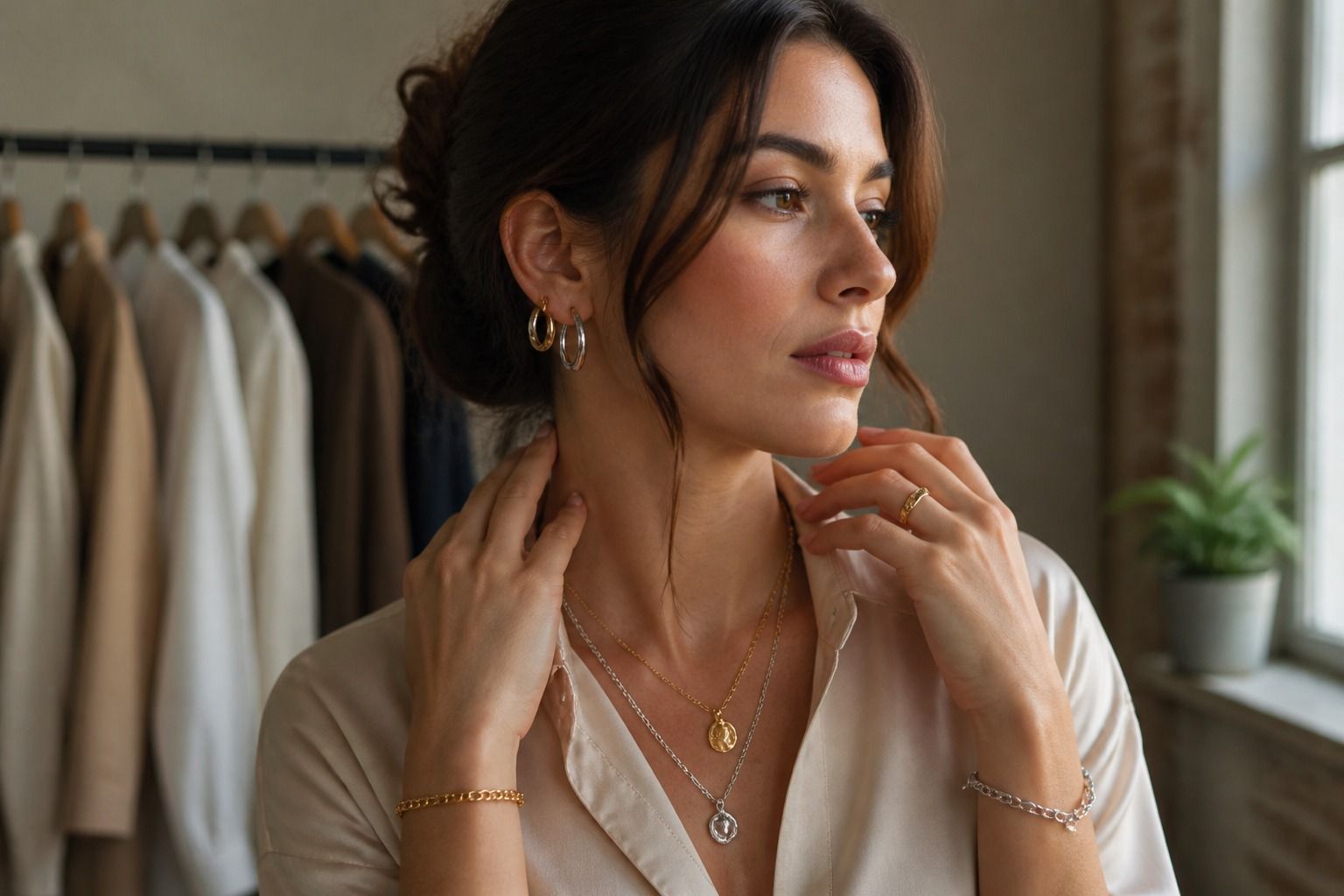
The gold or silver test is popular because it turns an abstract undertone question into a quick visual comparison. It can be useful, especially when the pieces are similar and the light is neutral, but metal preference is not a complete personal color analysis. Jewelry finish, contrast, hair color, and taste can all change the result, so use the test as one clue among several.
Why metal tests are popular
Gold reflects warm yellow light and silver usually reads cooler, so the difference can make undertone easier to notice. A well-matched metal may appear to disappear into the face while a less compatible one creates a visible edge or cast. This is why a simple side-by-side can feel more convincing than a questionnaire about whether your veins look blue or green.
The test is also practical because jewelry lives near the face. If a metal makes the skin look clearer in daylight, that information can guide glasses, buttons, belt hardware, and other details. It does not mean every item must match. It simply shows which direction is easiest to repeat when you want the face to remain the focus.
Set up a fair gold-versus-silver comparison
Use pieces that are close in size, shine, and distance from the face. A large polished gold necklace will make a different impression from a tiny brushed silver chain, and a photo with a warm filter can turn both metals yellow. Stand near a window, remove strong makeup, and compare the pieces one at a time against a simple top.
Look at the whole face, not only the wrist. Does the skin seem more even? Do the eyes look clearer? Does one metal create a grey or yellow patch around the jaw? Move the piece slightly because reflection changes with angle. The best result is the one that stays comfortable when you stop staring at the jewelry and look at your face as a whole.
Separate reflection from undertone
A metal can look good because its shine matches your personal contrast, even if its temperature is not the closest match. Someone with clear, high-contrast features may enjoy polished silver and polished gold for different reasons. Someone with softer coloring may prefer a brushed finish or a smaller scale in both metals. Finish and size belong in the comparison.
Try a second round with less reflective pieces. Compare soft gold with antique silver, or white gold with a muted yellow finish. If your preference changes completely, the original test was measuring intensity as much as undertone. That is not a failed result; it tells you that your jewelry choices need attention to surface and scale.
What rose gold and mixed metals change
Rose gold sits between warm yellow metal and cooler pink, which is why it can work for people who do not look settled in traditional gold. It may also echo a rosy surface tone without proving that the underlying undertone is cool or warm. Treat it as a bridge option and compare it with the metal you already wear most.
Mixed metals can be easier than forcing one direction. A cool silver watch with warm gold rings may look deliberate when the rest of the outfit has enough simplicity. The question is whether the combination supports the face and the clothing, not whether it satisfies a strict metal rule. Color analysis should increase useful options rather than shrink your personality.
Use the result without limiting your wardrobe
If silver repeatedly looks clearer, start with silver for necklaces, earrings, and glasses, then test warm accents below the face. If gold works best, use it as an easy anchor but keep an eye on whether the yellow reflection becomes too strong in certain lights. If both work, let the outfit's temperature and contrast decide.
A gold or silver test is most useful when it changes a decision you were already making. It can help choose a metal for a special purchase or explain why one accessory feels effortless. It should not make you discard a favorite piece that works with your coloring, distance, or personal style.
A useful conclusion from the test
If the gold or silver test points clearly in one direction, use it as a low-risk starting point for new jewelry. Pick a simple piece, wear it with colors you already know work, and notice whether it supports the whole outfit. A metal that looks good alone may feel too strong with a bright top or a high-contrast print.
If both metals look good, the result may be telling you that temperature is not your dominant feature. Choose by finish, scale, and the rest of the outfit. Brushed silver, antique gold, rose gold, and mixed metals all change the amount of contrast around the face. That freedom is useful information, not a problem to solve.
If neither metal looks right, check the light and the size of the pieces before deciding that your undertone is unusual. Try smaller or less polished samples, then return to fabric comparisons. The goal is to learn which kind of reflection feels balanced, not to force an answer from a single photo.
Connect jewelry with clothing
Metal does not need to be isolated from the rest of the outfit. Warm gold can echo camel, cream, rust, or olive; silver can support blue-grey, berry, charcoal, or cool white. The connection can be subtle. Repeating a small color relationship often looks more intentional than matching every accessory exactly.
If you mix metals, simplify another part of the outfit. A restrained neckline and one clear clothing color give mixed jewelry room to look deliberate. If the outfit already has strong contrast, several shiny metals may compete with the face even when each piece looks good alone.
Use the test as a shopping shortcut, not as a rule about what you are allowed to wear. A good accessory should be easy to repeat, comfortable in different lights, and compatible with the clothes you actually reach for.
Wear the chosen metal on an ordinary day rather than saving it for a special outfit. Notice how it behaves with your coat, knitwear, glasses, and the colors you use most. If it still looks balanced after a full day of movement and changing light, the gold or silver test has produced useful evidence. If not, adjust the finish or scale before questioning your whole color direction.
There is no requirement to make jewelry match a seasonal label perfectly. The most successful choice is the one that supports your face, your clothes, and your personal taste at the same time. Keep the clue, discard the pressure, and use the next purchase as another calm comparison.